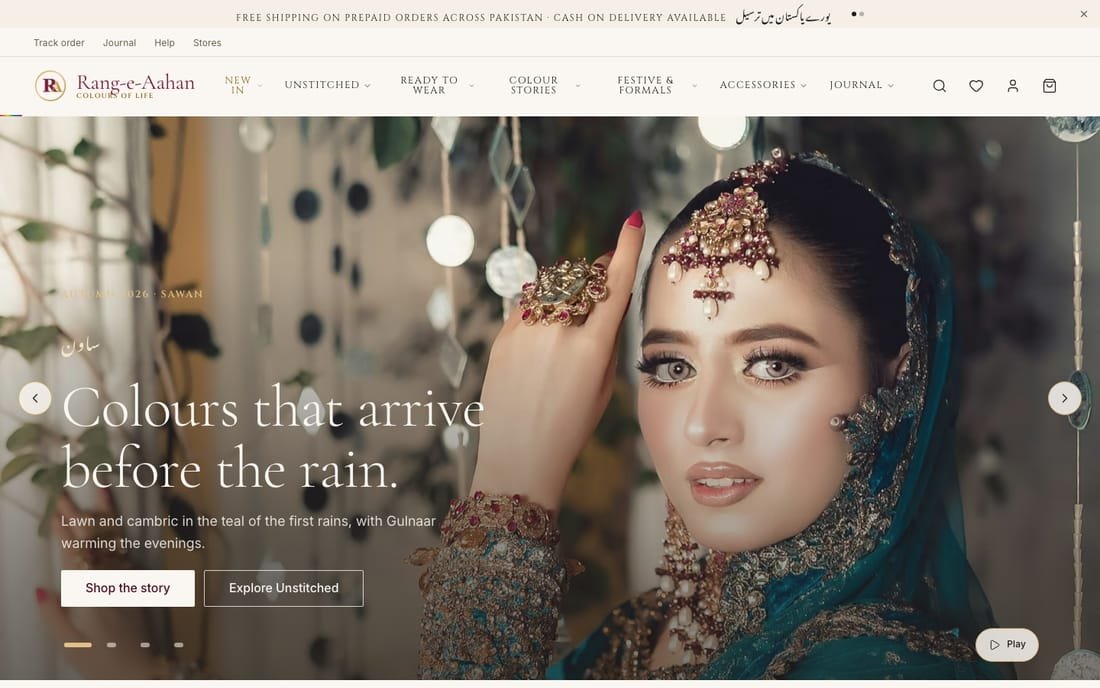
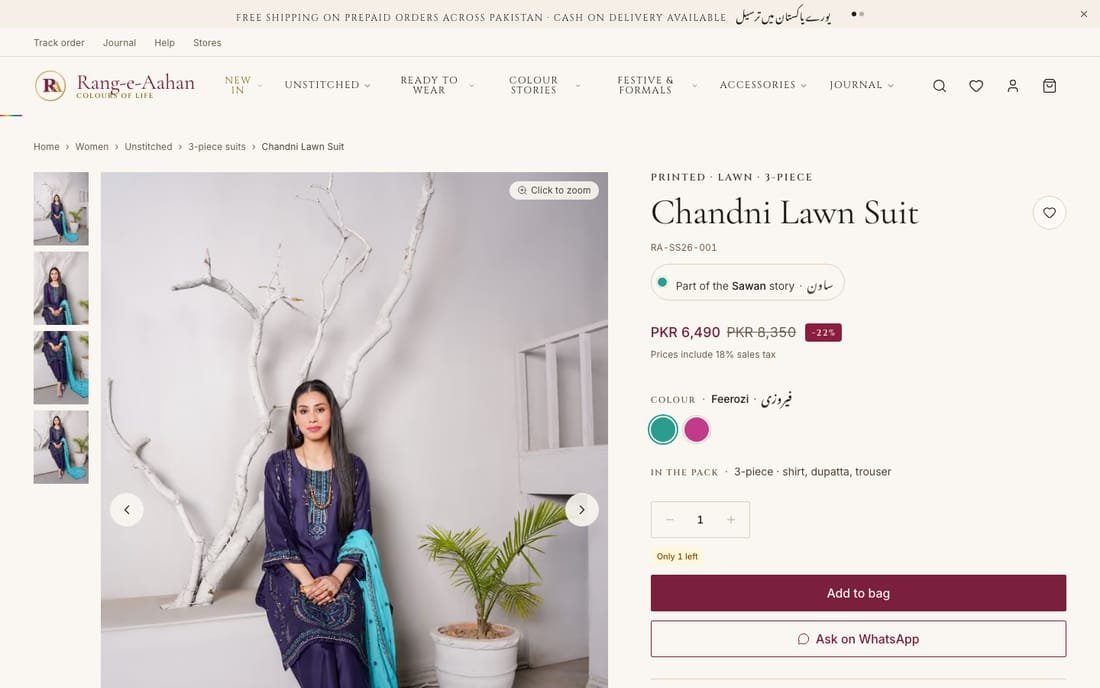
Storefront shown with licensed demo photography and sample products, ahead of the brand's own product shoots.
Look like the big labels, run like a small team.
Pakistani fashion e-commerce is a crowded, well-funded space, and shoppers judge a brand by its website before they judge the clothes. The brief was to look like it belongs in that company, while staying something a small team can operate every day without calling a developer.
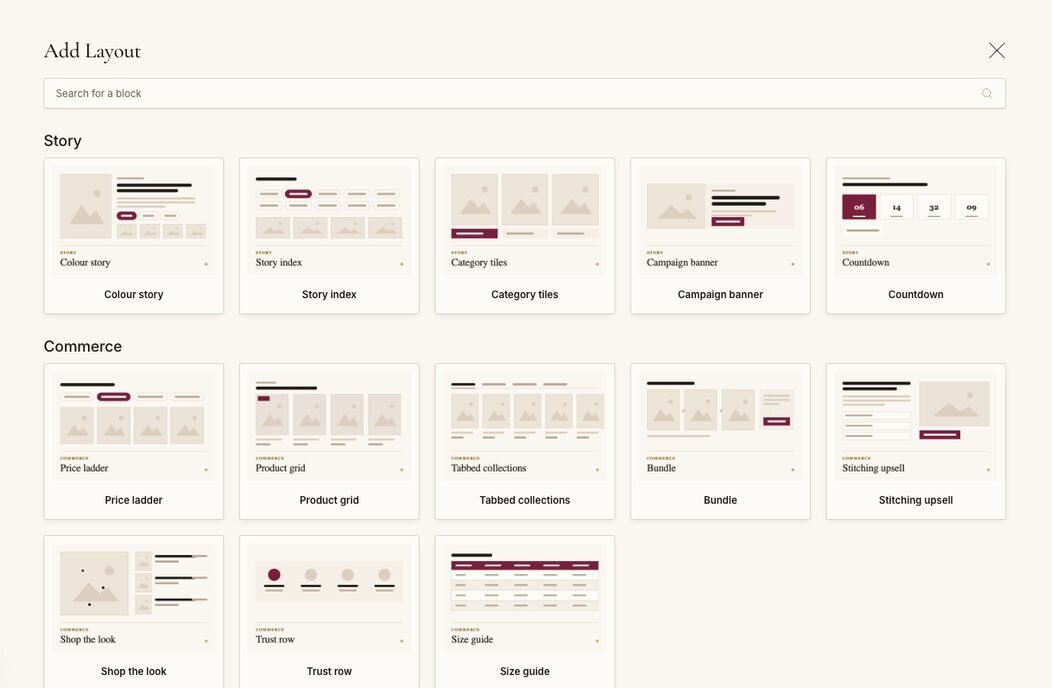
That second requirement shaped the build more than the first. Seasonal drops, sale pages, banners, navigation and editorial content all had to be things the brand changes itself, in minutes, on the morning of a launch.
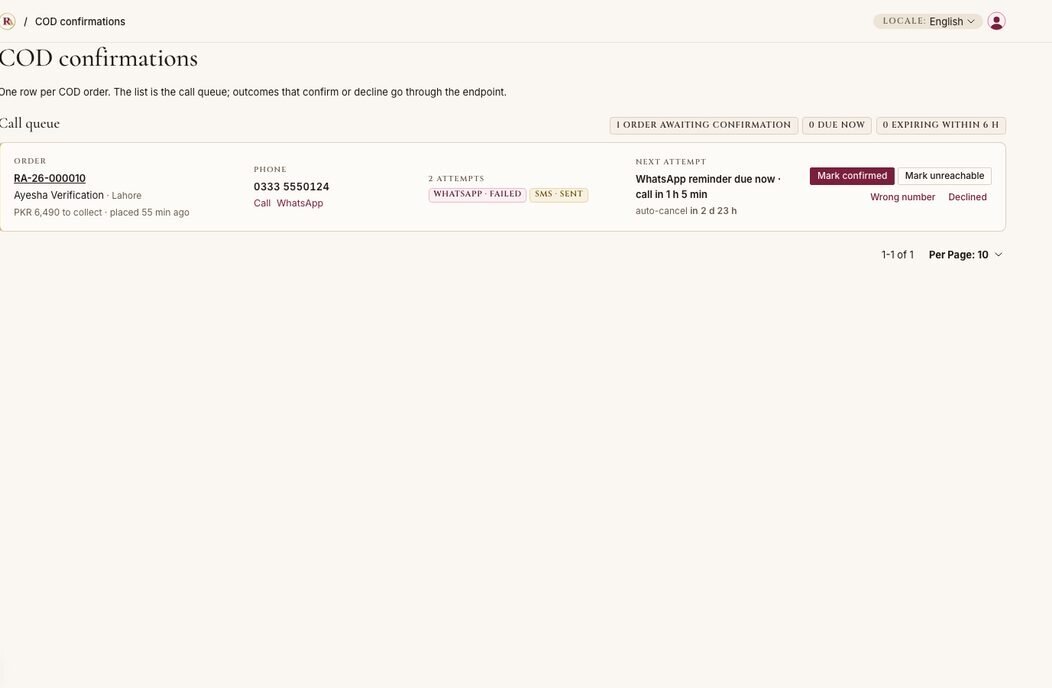
The third constraint was payment. A Pakistani store that only takes cards turns away a large share of its customers, so cash on delivery is core to the checkout rather than an afterthought, and mobile wallets were designed into the payment layer from the start.
- A storefront that sellsCollections, campaigns, sale and new-in pages, and search
- Accounts customers useOrders, returns, wishlists, saved addresses and store credit
- Content the team controls45 content blocks for pages, banners and campaigns
- A checkout for PakistanCash on delivery and bank transfer, with cards and wallets on the same layer
- Cash on delivery, confirmedA confirmation queue for cash on delivery orders
- Help with choosingA fabric glossary and size guides
Three choices that shaped the build.
Most of what a store lives or dies by is decided before the first screen is designed.
Server-rendered, not a single-page app
A fashion store lives on Google and on links shared in WhatsApp. Both need real HTML at the URL, so the storefront renders on the server rather than assembling itself in the browser.
A real CMS, not a hard-coded site
Every page, menu, banner and campaign is a content block the brand edits itself. It costs more engineering up front and removes us from the critical path forever after.
Payments behind one interface
Cash on delivery, bank transfer and store credit run through one internal payment layer today. Card and wallet gateways such as JazzCash and Easypaisa plug into that same layer once the brand's merchant accounts are approved, so adding one is a contained change, not a rewrite of checkout.
Built, and ready for launch.
The storefront, customer accounts, checkout and admin are built, and the code is covered by 66 automated test files. The team has an admin guide, with screenshots, written for the people who will run the shop day to day. The store is not live yet, so there are no traffic or sales figures to quote, and we would rather say that than invent them.
When it launches, this page gets the live performance numbers, the brand's own photography, and what the team does with the platform once it is theirs to run.
Selling online in Pakistan?
If you are building a store that needs to look the part, take mobile wallet payments and stay in your own team's hands, we should talk.